
Pinnacle Group expands property management portfolio with commercial mandate supporting nearly 200 community assets
Pinnacle Group will expand its property management services with the addition of nearly 200 commercial properties to its portfolio, strengthening its role as a market-leading provider of integrated housing, neighbourhood and workplace solutions.
The new instruction sees Pinnacle managing a diverse range of commercial and community-facing properties on behalf of Hyde Group, following Hyde’s strategic investment into Pinnacle in October 2024. Pinnacle’s role will involve income collection, lease management, rent collection and compliance reporting.

The commercial properties span a broad mix of uses that play a vital role in local communities, including children’s centres and nurseries, community centres, dance studios and offices, as well as a wide variety of retail and service units. These range from grocers, butchers, bakeries and cake shops to hair and beauty salons, opticians, post offices and supermarkets.
Geographically, the portfolio is concentrated in London, with additional properties located across Kent, the wider South of England, and Peterborough. Together, the sites represent a diverse and active estate that supports both local economies and essential community services.
“This commercial property instruction demonstrates the growing scope and breadth of Pinnacle’s management capacity & capability. This new contract is a strong reflection of our evolving partnership with the Hyde Group and our shared commitment to creating well managed places that support thriving communities.”

Jim Saunders
Group Business Development Director
Andy Hulme, Group Chief Executive Officer of the Hyde Group, commented: “This instruction builds on our growing combined offer with Pinnacle Group. Their expertise in managing complex, mixed-use environments gives us confidence that these assets will be managed to a high standard, supporting thriving community spaces and strengthening our collective offer to clients and customers.”
Operating across a portfolio of over 10,000 delivery sites and nearly 80,000 homes, Pinnacle Group delivers services nationwide, with a footprint that spans everything from small rural communities to major metropolitan centres in the country’s key cities.
The expanded mandate further broadens Pinnacle Group’s operational scope, drawing on its established expertise in managing complex, mixed use environments and customer focused services, while reinforcing its long term growth strategy.
Pinnacle Group delivers sustained growth across homes, neighbourhoods and workplaces
During the 2025–26 financial year (April 2025 to March 2026), Pinnacle Group secured over £70 million of new contracts (total contract value), reflecting continued confidence in its ability to deliver high‑quality housing management, neighbourhood and workplace solutions across the UK.
These successes supported a significant expansion of Pinnacle’s housing operations. Over the year, the Group extended its nationwide housing portfolio by more than 3,000 homes, bringing the total to over 78,000 homes under management.
https://youtu.be/qsVD-Czwt4o
Growth was driven by a series of new appointments and partnership extensions with local authorities, affordable housing investors and neighbourhoods contracts, including further expansion with Legal & General Affordable Homes, where Pinnacle now manages over 5,000 homes – more than 70% of their total portfolio.
The Group also strengthened relationships with partners such as Morgan-Stanley backed Flint Housing and Pears‑backed MTD Housing, where Pinnacle’s managed portfolio grew by nearly 500 homes.

Pinnacle continued to strengthen its position within specialist investor-led housing markets. Its institutional investor management portfolio grew to over 12,000 homes nationally, supported by new appointments with organisations including BluePine Living and Zen Housing, while its own For‑Profit Registered Provider (FPRP) portfolios expanded to more than 1,500 homes.
The Group’s market rent portfolio, via its Place by Pinnacle brand increased by over 20%, with continued growth within new-build Build to Rent schemes nationwide, including a landmark new contract on behalf of This City, an arms-length Build to Rent developer owned by Manchester City Council.
Pinnacle expanded its neighbourhood service provision to more than 10,000 locations across the UK, including block cleaning, caretaking, grounds maintenance, concierge and estate services. During the year, Pinnacle was appointed to deliver communal cleaning and grounds maintenance services for across the whole Hyde Group portfolio.
Pinnacle handled over one million customer calls during the year through its 24/7 contact centre operations, supporting more than 50 clients across housing, local and central government. The company’s focus on service excellence was recognised with the achievement of ServiceMark accreditation, reflecting consistently high standards of customer experience.
A notable development during the year was the launch of Pinnacle Workplace, a new national brand delivering workplace services across more than 80 locations. This included a flagship three‑year, £15 million contract at JCB’s global headquarters, providing specialist facilities management services and production support.
Pinnacle continued to make an impact in communities through its work with government and local partners. Through the Meadowship scheme with Bromley Council, the Group has now supported more than 400 families to move from temporary into permanent accommodation. Pinnacle also supported over 11,000 families into Service Family Accommodation on behalf of the Ministry of Defence and surpassed 500 families housed under the MOD’s Afghan Relocation and Assistance Policy.
Investment in innovation remained a priority. During the year, Pinnacle strengthened its AI and automation capabilities, enhancing its resident app, Ark, and scaling the use of collaborative robots (cobots) – autonomous machines that work alongside colleagues to improve efficiency, consistency and service outcomes across neighbourhood services.
“Over the past year, we have continued to grow the scale and reach of the business while staying focused on what matters most: delivering well managed homes, neighbourhoods and workplaces which result in strong communities and satisfied customers. I’m proud of the impact our teams have made across the country and the trust our client partners continue to place in us.”

Perry Lloyd
Group Chief Executive
Pinnacle Group to manage homes at London’s iconic Oxo Tower
Pinnacle Group has been appointed to manage more than 160 homes in and around the iconic Oxo Tower on London’s South Bank, working in partnership with Coin Street Housing Secondary Housing Co-operative, which will become South Bank Community Housing Co-operative.
The appointment follows the coming together of homes previously managed by the Palm, Redwood and Iroko housing co-operatives, as part of a wider transition towards a single co-operative structure.
Established to great note in the late 1990s and early 2000s, each of the schemes made their mark for their distinctive architecture and strong community focused neighbourhood that Coin Street has nurtured for over 40 years.

Just behind the Oxo Tower, Pinnacle will oversee 27 homes, including ten houses, a four-storey block containing five two-bed flats and a ten-storey block comprising ten one-bed flats.
In the tower itself, Pinnacle will manage 78 homes, spanning floors three to seven. These include eight one-bed flats, 45 two-bed flats and five three-bed homes.
A short walk away, to the Southwest of the Tower, Pinnacle will take responsibility for 59 homes arranged around a much-loved communal garden, including 32 five-bed houses, six three-bed maisonettes and 21 one and two-bed maisonettes and flats.
The appointment further strengthens Pinnacle Group’s position as a market-leading provider of integrated housing, neighbourhood and workplace services. With a footprint spanning over 75,000 homes and more than 10,000 delivery locations across the UK, Pinnacle brings more than three decades of expertise in managing and maintaining places with professionalism, consistency and care.
Pinnacle will work collaboratively with Coin Street Housing Coop to ensure homes and shared spaces are safe, well maintained and cared for, supporting communities that feel proud, connected and resilient.
Nabeel Alhassan, Chief Officer, South Bank Housing Co-operative, said: “We are proud of the community led neighbourhood that has been built here over the past 40 years. Bringing these homes together under a single co-operative structure is an important step in continuing that legacy. As we begin this new chapter with Pinnacle Group as our managing agent, our focus is on ensuring residents receive a reliable, high-quality service, while keeping the co-op at the heart of how decisions are made. We remain accountable for those services and look forward to working closely with Pinnacle and residents to support a community that feels well cared for, connected and valued.”
“We’re delighted to be partnering with Coin Street to manage these important homes at the heart of London’s South Bank. Coin Street has built one of the capital’s most enduring community-led neighbourhoods, and we share their commitment to inclusive, thriving places. Our focus is on delivering a high-quality, people-centred service every day. We look forward to working closely with residents, colleagues and partners to support these communities.”

Claire Kober
Managing Director, Homes at Pinnacle Group
The Pinnacles 2026
https://www.youtube.com/watch?v=JYUBLmUYX5k
On 26th March, The Pinnacles, our annual staff awards ceremony, took place at the Barbican Centre in London, celebrating the exceptional achievements of our teams.
More than 80 colleagues came together to celebrate the people and teams who've made a real difference across the business this year.
A total of 21 finalists were celebrated from across all areas of the business in seven new award categories, designed to champion both teams and individuals. The finalists were selected from nearly 300 nominations made by colleagues, who were encouraged to submit those who inspire positive change, deliver exceptional service and live our values every day, helping to shape an organisation we’re all proud to be part of.
Peregrine Lloyd, Chief Executive of Pinnacle Group, said: “The Pinnacles are about recognising the colleagues who live our values every day. It has been a privilege to celebrate this year’s outstanding achievements and the difference our people make across communities nationwide.”
Congratulations to all of this year's finalists and winners!
The Pinnacle Award
Mick Furlong
Mick, who is an Area Supervisor on our Yorkshire Police contract, has served with dedication for 16 years, consistently setting the standard through his hard work, pride, and professionalism. Unfortunately, Mick was unable to attend in the afternoon, so Colin Hill, Regional Operations Manager, accepted the award on his behalf.

Congratulations to Mick and our other Pinnacle Award finalists:
- Leon Simpson, Quality Manager, Projects & Governance
- Jenna Burford, Housing Officer, Pinnacle Service Families
Heart of Pinnacle Award
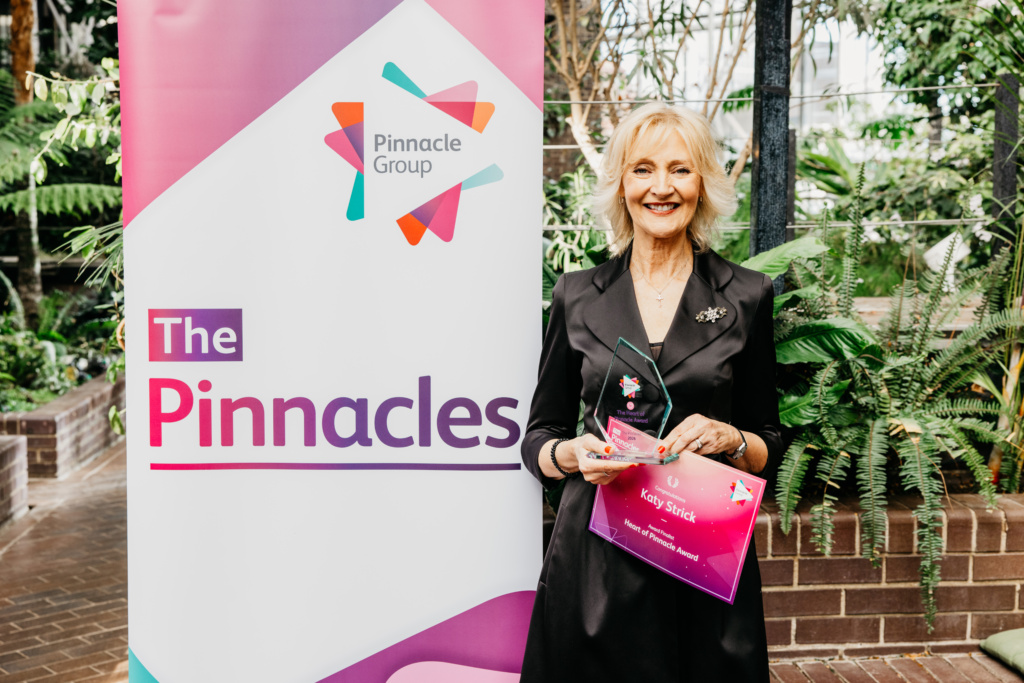
Katy Strick
For 15 years, Katy Strick, Receptionist, has been the first face people see when they walk through the doors of Holborn Tower and the last person they meet as they leave. In that role, she has done far more than welcome visitors. Katy has quietly shaped the culture of our head office. Every day, she brings professionalism, warmth and a sense of calm that sets the tone for the whole office.
Outstanding Leadership Award
Emily Cook
Emily is Head of Extra Care and Regional Operations in our Homes division. She demonstrates exceptional leadership through her positivity, support, and dedication to her team. Emily brings an energy that inspires confidence and motivates everyone to excel. She creates a safe environment where questions are welcomed, development is supported, and challenges are faced together.
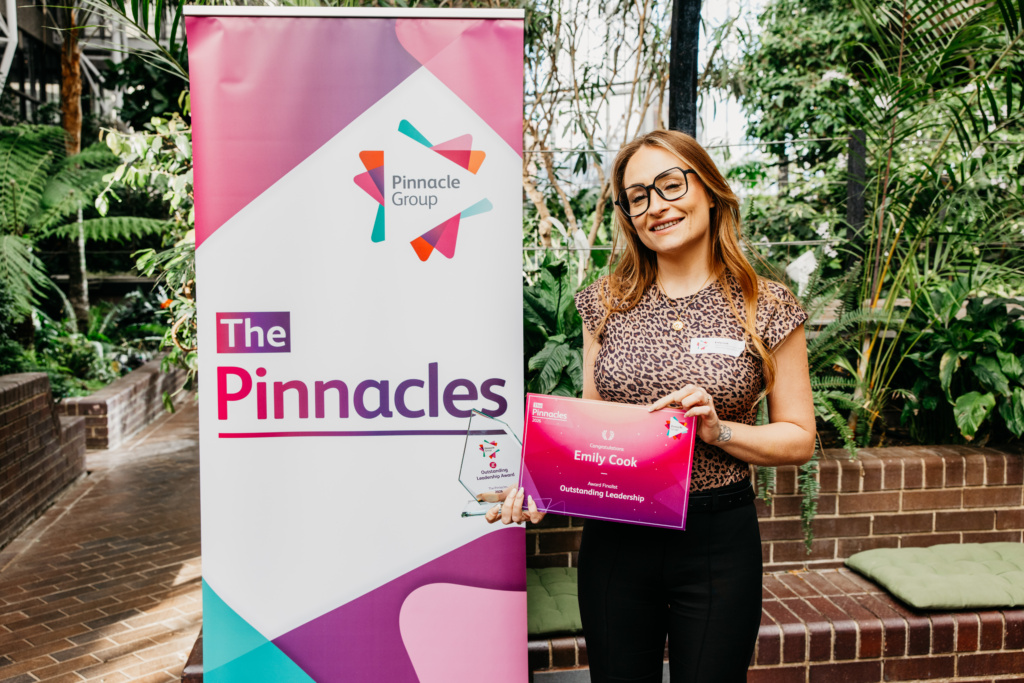
Congratulations to Emily and our other Outstanding Leadership Award finalists:
- Lewis Spiers, Supervisor, Soft FM
- Hayley Coates, Shift Manager, Pinnacle Connect
Collaboration Award
David Bruce
David is a Housing Officer on the Pinnacle Service Families contract who excels through his collaboration with DIO’s repairs and maintenance contractors, military welfare teams, and colleagues across the service community. His joined‑up approach consistently delivers the best outcomes for families. David also achieved over 30 five‑star Trustpilot reviews in the past year.
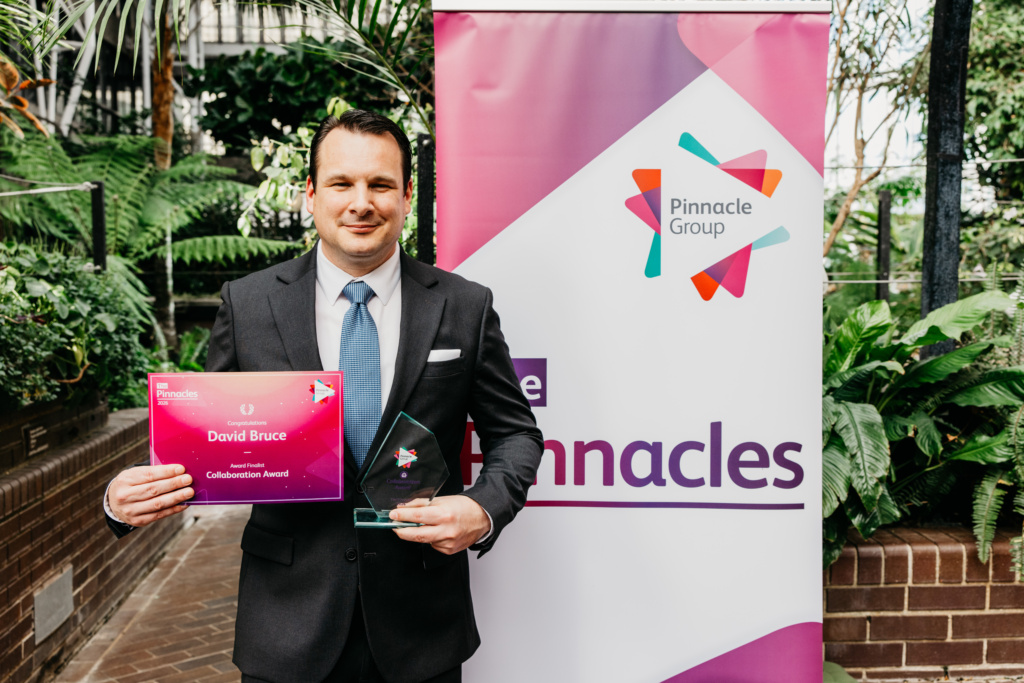
Congratulations to David and our other Collaboration Award finalists:
- Sarah Chapman, Customer Satisfaction and Insight Manager, and Sarah Hampson, Continuous Improvement Manager, Pinnacle Service Families
- Steve Box, Ben Hawley, Colin McPhail and Liz Preedy, Bidding Team
Frontline Hero
John Hanson & Helen Regan
Housing Support Officer, Helen and Maintenance Manager, John demonstrated exceptional commitment to our values during an incident with a vulnerable tenant. When other agencies stepped back, Helen and John carried out a welfare check. Receiving no response, they checked through the windows and found the tenant unconscious. They called the emergency services and gained access, with paramedics confirming their swift intervention likely saved his life.
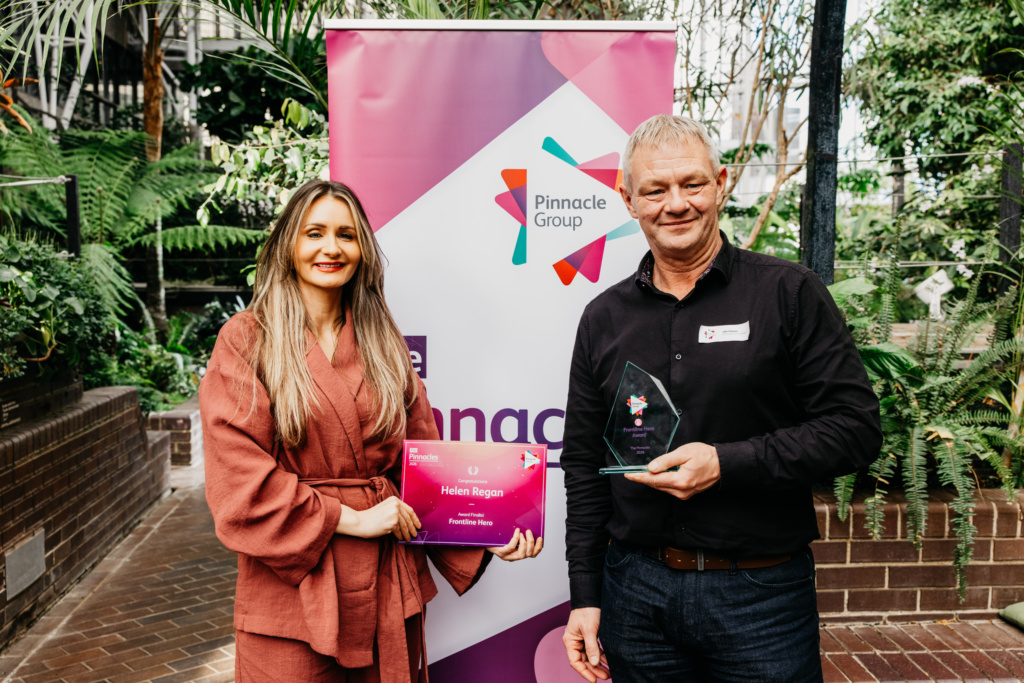
Congratulations to John and Helen, and our other Frontline Hero finalists:
- Norma Thompson, Move Assistant, Pinnacle Service Families
- Sarah Reeves, Chef Manager, Pinnacle Workplace
People & Planet Impact Award
Douglas Din
Douglas is a cleaner in Brockley. He consistently goes above and beyond his role, delivering excellence through his high-quality cleaning standards, safe pesticide control, and proactive support for vulnerable residents, including clearing overgrown gardens and assisting with essential outdoor tasks.

Congratulations to Douglas and our other People & Planet Impact Award finalists:
- North Region (South) Team, Pinnacle Service Families
- Adrian Heaven, Housing Officer, Pinnacle Service Families
Trailblazer Award
Josh Fenton
Contract Safety Manager at Pinnacle Workplace, Josh’s leadership has transformed the health and safety culture on the JCB contract. He consistently challenges established practices to make improvements and most notably redesigned the permit to work system now adopted across multiple divisions.
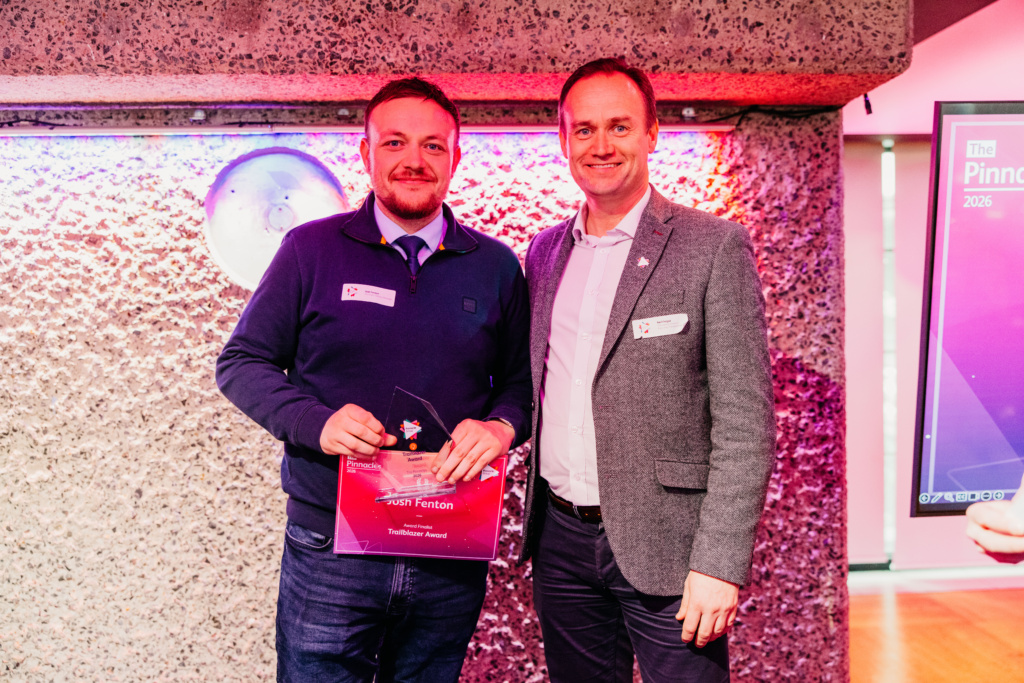
Congratulations to Josh and our other Trailblazer Award finalists:
- Jo Kerry, Head of Regional Operations, Pinnacle Service Families
- Laura Newey, Account Director, Legal and General
Behind-the-Scenes Star
Ayaz Jan
Ayaz, a Data and Reporting Analyst, is recognised for his calm problem-solving approach and dedication. He delivers accurate, high-quality insight that underpins critical decision making on the Pinnacle Service Families contract.
Congratulations to Josh and our other Trailblazer Award finalists:

- Aidan Chapman, Superintendent, Kirklees Schools Team
- Maria De Fatima De Jesus Caldeira, Cleaner, Myatts Field North
Pinnacle Group extends partnership with Flint Housing to North Kensington Gate
Pinnacle Group has strengthened its growing relationship with registered provider of social housing, Flint Housing, through provision of full housing management services for 85 social rented homes at the North Kensington Gate development in London.
North Kensington Gate is a landmark development delivering high-quality homes in one of London’s most vibrant and diverse communities.
Pinnacle is providing complete housing management services, including tenancy management, customer service, maintenance and void management – ensuring residents benefit from a responsive, professional and community focused experience.

“Commencing services at North Kensington Gate marks a key milestone in expanding work with Flint Housing. Our team is committed to delivering excellent services and supporting Flint’s mission to provide high-quality affordable homes.”
Claire Kober
Managing Director, Homes at Pinnacle Group
This growing partnership reinforces Pinnacle’s position as a leading management provider for For-Profit Registered Providers (FPRPs). The company now manages more than 5,000 homes for over a dozen FPRPs.
As part of its social purpose, every surplus Pinnacle generates is reinvested through the Hyde Group to help tackle the UK’s housing crisis – ensuring high-quality management supports the delivery of more affordable homes nationwide.
Claire Kober on why the devil is in the commonhold details
The publication of the draft Commonhold and Leasehold Reform Bill last month has been framed as the moment England and Wales began to move beyond leasehold.
Its sweeping programme includes banning new leasehold flats once a viable commonhold framework is established; capping existing ground rents at £250, then cutting them to a peppercorn after 40 years; and abolishing forfeiture in favour of a fairer enforcement regime.
Ministers say it is one of the most significant overhauls of property law in decades, with big implications for homeowners, developers and lenders. Crucially, they say, it marks the start of the end for the ‘feudal’ leasehold system.
But as the industry prepares responses to the consultation on the bill, a key question remains: who will run commonhold buildings? Commonhold hands control to residents via commonhold associations, making them responsible for a building’s governance, finances and stewardship. The bill strengthens this by introducing a commonhold community statement (a statutory ‘rulebook’), mandatory reserve funds and ways to organise mixed-use schemes in ‘sections’ where only those affected by a service or change vote on it.
In theory, this is welcome empowerment. In practice, it is a profound operational shift. But there are useful lessons from the residents’ management company (RMC) model. RMCs work well when residents have clear governance structures and a shared understanding of their financial and management responsibilities, supported by a reliable professional team, underlining the importance of embedding similar safeguards in the commonhold framework.
"If commonhold is to succeed, then capability, not just policy, must come to the forefront."
With all its flaws, leasehold provided a clear structure, with freeholders legally responsible for the building, aided by a managing agent. Commonhold replaces that central point of accountability with volunteer homeowners’ committees.
Managing a residential block is complex work. Overseeing fire safety compliance, planning major works, setting budgets, commissioning contractors, navigating disputes and balancing residents’ and commercial occupiers’ competing interests isn’t easy. Many of leasehold’s problems, such as spiralling service charges and poor communication, reflect how challenging it is to run buildings well.

The bill promises greater transparency for residents and accountability for managing agents, but transparency does not create expertise, nor does it guarantee good decision-making by residents themselves. The sector also has yet to reckon with the sheer variety of buildings that will be expected to adopt commonhold. A small, cohesive block of six flats presents a very different governance challenge from a 300-unit, mixed-tenure block with retail, shared energy systems and complex compliance needs.
No easy transition
Even with reforms proposing to reduce the threshold for converting from leasehold to commonhold, in some cases to 50% of qualifying leaseholders, rather than requiring consensus, transition will not be straightforward. The draft bill acknowledges the phased and uncertain nature of implementation, with key timings, exemptions and transitional arrangements yet to be finalised.
This makes a fragmented landscape likely; some buildings could move swiftly to commonhold while others remain in leasehold for years, with many caught in between. A two-tier market could emerge, where forward-thinking schemes adopt the regime early and more complex buildings stall due to ownership patterns or lack of readiness.
Critics also warn that eroding freeholder responsibilities may undermine investment in building safety and long-term maintenance, especially where resident-led associations lack the resources or expertise to manage and prioritise them. Mandatory reserve funds are important, but they will not safeguard against underfunding or poor planning.
If commonhold is to succeed on the scale envisioned, then capability, not just policy, must come to the forefront. That means investing in training, professional support and governance frameworks; equipping residents to take on big responsibilities confidently; and ensuring managing agents can adapt to a more collaborative, resident-directed role. It means lenders, developers and local councils must understand the operational, not just the legal, implications.
The bill may set the framework, but the devil is in the detail. The real test will be what happens when the governance of thousands of buildings becomes the responsibility of the people who call them home.

Claire Kober
Managing Director (Homes), Pinnacle Group
This article was originally featured in Property Week, on 18th February 2026.
Pinnacle Group’s BTR portfolio reaches nearly 1,500 homes with new South London operating appointment
Pinnacle Group has been appointed by Principal Asset Management®, the US based global investment manager, to operate new Build to Rent (BTR) homes across a major development in South London.
The contract win strengthens Pinnacle’s growing role as a specialist operator in the UK’s rapidly expanding Build to Rent sector, delivering professionally managed, high quality rental homes for residents and reliable long-term performance for investors.
Pinnacle now manages nearly 1,500 BTR homes nationwide, emphasising its growing presence in the sector.
Principal has forward funded 130 BTR units at King George’s Gate in Earlsfield – part of Taylor Wimpey’s broader masterplan – and has acquired a 66-unit residential building within the Clapham Park regeneration area.
Pinnacle has now begun operating the Clapham development, which reached practical completion in late 2025. Services include resident onboarding, customer support, compliance, repairs coordination, building safety management, and community engagement.
Both schemes are located in established south London neighbourhoods with strong rental demand and excellent transport connectivity.

With the King George’s Gate project set to complete in 2027, Pinnacle will now continue to build its relationship with Principal as preferred operator of its pipeline.
“Partnering with Principal to support the delivery of high-quality Build to Rent homes in this London community reflects our commitment to what residents value most – safe, well managed homes, a responsive service and a strong sense of community. As a people-first operator, we draw on 30 years of experience combining professional management with long term stewardship to ensure stability, quality and a great rental experience for residents.”

Claire Kober
Managing Director, Homes at Pinnacle Group
The new London scheme builds on Pinnacle’s substantial and expanding national footprint. The Group now manages nearly 75,000 homes and operates across more than 10,000 locations, combining operational excellence with a commitment to creating thriving, sustainable communities.
As a standalone subsidiary of the Hyde Group, every surplus Pinnacle generates is reinvested into tackling the UK housing crisis – ensuring that partnerships such as this deliver wider social value.
Behind the Job: Debra Petrucci
Recently, Debra Petrucci, Head of Operations for the specialist Facilities Management division at Pinnacle, Pinnacle Workplace, spoke with Facilitate Magazine to discuss her role and experiences in the FM industry.
What do you do?
I am head of operations for Pinnacle Workplace, the specialist FM division of Pinnacle Group.
What attracted you to FM, and how did you get into the industry?
My background is in the hospitality industry, and I came into FM through the B&I catering sector, then through soft services with Mitie to a wider FM role now with Pinnacle.

How long have you been in your current role?
I have worked here for two-and-a-half years.
Do you see yourself predominantly as a task or a people manager?
Predominantly a people manager – our 450-plus operatives are focused on service delivery, so it’s key that we give them the right leadership and support to execute those tasks.
Would you describe your role as predominantly operational or strategic?
My role blends both; I am field-based and oversee day-to-day operations. Working alongside our teams and clients often gives me the insights that shape our strategic plans.
How many people are there in your FM team, and to whom does the FM team ultimately report?
We are an operations team of 10, and we report to the managing director of the Workplace division.
My top perk at work is…
The variety that my role brings. We oversee a number of different service lines, so no two days are the same. It’s the diversity of contracts, clients and our team that I enjoy.
What has been your biggest career challenge to date?
Continuing operations during Covid-19 while having to reduce our team was the most difficult time. Fortunately, we re-employed most of them when it was over.
If you could change one thing about the industry, what would it be?
That more people could see that the FM sector provides a varied and interesting career choice, and do more to engage with young adults at the start of their working life.
Any interesting tales to tell?
I’ve experienced some fascinating moments in FM – from managing unique sites to handling unexpected challenges – every day brings something new and keeps the role exciting.
If I weren’t in facilities management, I’d probably be…
In the legal field, probably involved in employment or corporate law.
Which “FM/Workplace myth” would you most like to put an end to?
That FM is a male-dominated industry, my experience has been quite the opposite, and I have worked with very diverse teams.

What single piece of advice would you give to a young facilities/workplace manager starting out?
Don’t be afraid to ask to be involved in projects or contract mobilisations that may push you out of your comfort zone – you will learn so much, especially about how to react to mistakes, issues and problems.
What was the weirdest day you’ve had in the office?
I once managed a contract that had a restricted nuclear area; the first time visiting that area and hearing the radiation detector was very weird – like being on a film set.
Early bird or night owl?
Early bird. Our whole ops team are early risers, so we try to get a head start on the day before the phone starts ringing or the traffic gets too bad!
What FM job in the world would you love more than anything?
I would love to oversee a royal estate like Sandringham. Managing the historical buildings would be an amazing challenge. I would particularly enjoy the grounds maintenance and arranging the dinner parties and events.
And where would FM be an absolute nightmare?
The London Underground.
Your life outside FM mostly involves…
My husband, daughter and our friends and family. We are all foodies, so my spare time is filled with lots of cooking, socialising and travelling.
This article was originally featured in Facilitate Magazine, on 6th January 2026.
Pinnacle surpasses 3,000 homes under management for L&G Affordable Homes
Pinnacle Group (Pinnacle) has announced that it now manages more than 3,000 homes on behalf of L&G Affordable Homes (LGAH), marking a significant milestone in the partnership between the two organisations.
Throughout 2025, Pinnacle has expanded its portfolio with several new developments.
In Birmingham Perry Barr, the company took on 487 homes across a mix of affordable rent and shared ownership. In Witheridge, Devon, Pinnacle currently oversees 155 homes, while Colindale in North London now contributes more than 300 additional homes under management after handover completed this month.
Further expansion is on the horizon, with International Way in Stratford set to add 79 homes at London Affordable Rent to Pinnacle’s portfolio, while Alton Brewery in Hampshire will add 84 homes.

Pinnacle provides a full range of housing management services for affordable and mixed-tenure developments, including customer service and resident engagement, repairs and maintenance coordination, compliance and safety oversight, and community development initiatives. Its approach combines operational expertise with a strong focus on customer experience, ensuring homes are well-managed and residents receive responsive, reliable support.
“Reaching the 3,000-home milestone with LGAH is a proud moment for our team. This growth demonstrates the strength of our partnership and our shared ambition to deliver safe, affordable and well-managed homes. With new developments underway, our focus remains on delivering exceptional service and building stronger communities across the UK.”
Claire Kober
Managing Director, Homes at Pinnacle Group
L&G Affordable Homes delivers thousands of new affordable, sustainable homes each year. Since its launch in 2019, LGAH has invested over £1 billion in affordable housing with an ambition to create thriving communities and achieve net-zero carbon across all new homes by 2030.
Shaun Holdcroft, Head of Affordable Homes at L&G Affordable Homes, said: “Working alongside Pinnacle to manage over 3,000 homes is a landmark achievement. As we bring additional sites online, our collective priority remains ensuring residents have access to high-quality, affordable homes backed by first-class support.”
Claire Kober discusses why people will shape housing’s future
Hopping off the DLR at Canary Wharf and stepping into the Central Business District, social housing might feel a world away. Canary Wharf is synonymous with wealth: home to global banks, high-end restaurants and even the UK’s largest Waitrose with its own temperature-controlled cellar for wine tastings. It’s easy to assume this is a place reserved for the well-heeled, far removed from those on modest incomes.
But that perception is increasingly no longer the reality. Increasingly, in diverse boroughs like Tower Hamlets, social and affordable housing tenants live cheek-by-jowl with high earners, sharing blocks, spaces and amenities in some of the UK’s most dynamic urban environments. While this – to some degree – has always been the case in London, nationally it’s a shift that is reshaping communities and challenging old assumptions about who lives where.

Take Arafat, for example. At 25, he’s worked as a property manager for Pinnacle at Wood Wharf for four years, just a short walk from the iconic One Canada Square.
Born in Limehouse where he still lives and coaches boxing to youngsters at the Limehouse Boxing Academy, the middle of nine siblings, and raised in social housing, he now plays a vital role in shaping a community where diverse residents coexist.

Managing 143 affordable rent homes, his job isn’t just about maintenance and compliance – it’s about creating a sense of belonging and trust. Many of the tenants he knows from his time at school, with his local links supporting him to build relationships. He knows that a well-run community is more than bricks and mortar; it’s about people feeling safe, supported and proud of where they live.
Budget measures
This year’s Budget and new housing legislation bring a raft of changes: compliance obligations, governance upgrades and financial pressures. These are important, and they will rightly dominate sector conversations.
But in the rush to meet regulatory requirements, we must not lose sight of the human-centric nature of housing. Homes are not spreadsheets. Communities are not compliance checklists. They are living, breathing ecosystems that depend on relationships, empathy and care.
Property managers like Arafat are the glue that holds these ecosystems together. They are the ones who mediate between residents and landlords, who resolve disputes before they escalate, who notice when a vulnerable tenant needs extra support.
In mixed-tenure developments, their role becomes even more critical. They help create cohesion in places where people from very different backgrounds share the same corridors, gardens and amenities. Without that human touch, integration can falter and the promise of vibrant, inclusive communities risks becoming hollow.
The sector is evolving fast. Institutional investors are pouring billions into housing, attracted by stable returns and long-term demand. For-profit providers (FPRPs) are scaling up, and Build-to-Rent schemes are proliferating. According to Savills, FPRPs now own at least 43,100 affordable homes – around 1% of all affordable housing – and have ambitions to reach 150,000 by 2030.
These trends bring opportunities: better quality homes, professional management and investment in infrastructure. But they also bring challenges – chief among them, ensuring that growth does not come at the expense of humanity.
As we navigate this new landscape, we need to champion the people who make housing work on the ground. Legislation can set standards and budgets can allocate resources, but neither can replace the value of those who know their residents by name, who understand the rhythms of a community and who take pride in making a place feel like home.
The future of housing will be shaped by policy and capital – but also by people. And if we want that future to be inclusive, resilient and genuinely transformative, we must invest not only in buildings but in the human relationships that bring them to life.
It starts with recognising and valuing the people who make those communities possible – people like Arafat. While they care for our homes and look after us, we need to ensure we’re investing in them too. Building positive communities isn’t just about where we live; it’s about how we live together, and the vital role these individuals play in shaping that experience.
Claire Kober
Managing Director (Homes), Pinnacle Group
Pinnacle expands partnership with Pears-backed MTD Housing by nearly 500 homes
Pinnacle Group (Pinnacle) has strengthened its partnership with MTD Housing, a Pears-backed for-profit registered provider, by taking on the management of an additional 475 Shared Ownership homes.
This significant expansion brings Pinnacle’s total portfolio under management for MTD to over 800 homes nationwide.
The collaboration began in January this year when Pinnacle assumed management responsibility for a newly acquired portfolio of 327 homes.
Now, the partnership extends across locations from Newquay to Norwich and Hythe to Harrogate, reinforcing Pinnacle’s national reach.

Under the agreement, Pinnacle will deliver a comprehensive range of services, including leaseholder onboarding and management, building compliance, lease management, staircasing, resales and void property management.
With a proven track record of managing over 74,000 homes across diverse tenures – affordable housing, PRS, military homes, student accommodation and later living – Pinnacle is well positioned to deliver exceptional service to both clients and residents.
This growth reflects Pinnacle’s broader success in securing key contracts over the last financial year. The company now manages over 5,000 homes on behalf of 13 for-profit registered providers, acting as a vital link between institutional capital and a housing market seeking investment.
“We’re delighted to be entrusted with these new homes and to continue building on our successful partnership with MTD. This growth demonstrates our ability to deliver consistent, customer-focused services at scale.”
Claire Kober
Managing Director, Homes at Pinnacle Group
ESG Impact Report 2025

Our latest report detailing a series of key ESG pledge successes has today been published, highlighting our progress across the four key pillars of our ESG Framework.
Today, we are delighted to publish our latest ESG impact report highlighting the exceptional service and positive difference we make to every community we serve.
This report not only celebrates our achievements but acts as a marker on our journey to net zero. This represents a substantial challenge, but is one we welcome, and are making significant strides towards.
Read our ESG Impact Report 2025
"While this year presented complex challenges in reducing emissions, we recognise that progress is not always linear. Despite these hurdles, we are proud to celebrate several milestones, including a 100% increase in electric vehicles within our fleet, 48% green energy usage across our offices and depots, and 80% of cleaning chemicals now classified as sustainable products. These achievements reflect our ongoing efforts to reduce our environmental footprint and protect our planet."

Paul de Kock
Head of Projects and Governance
Pinnacle continues to be a socially conscious and value-led business, this is demonstrated through the exceptional achievements of our people in protecting our planet, the social investments in our team and culture, and the communities we serve.